
Jordan is a country that feeds the soul in every sense of the word. Long before travelers arrive at Petra's rose-red facades or float in the Dead Sea's mineral waters, the food begins telling the story of this land — a story of ancient trade routes, Bedouin generosity, and a culinary tradition that stretches back thousands of years. Jordanian cuisine sits at the crossroads of Levantine, Egyptian, and Arabian cooking, drawing from each tradition while maintaining a character that is unmistakably its own. To eat in Jordan is to understand the country. Every dish carries history, every shared meal is an act of hospitality, and every cup of coffee poured is an invitation to sit, stay, and belong. This guide is your introduction to the flavors, traditions, and food experiences that will make your journey through Jordan unforgettable.
In This Guide
- Mansaf: The National Dish
- Maqluba: The Upside-Down Feast
- Falafel & Hummus: Daily Staples
- Knafeh: The Legendary Sweet
- Zarb: Bedouin Underground Barbecue
- Arabic Coffee & Tea Culture
- The Jordanian Breakfast
- Street Food in Amman
- Bedouin Hospitality
- Culinary Experiences for Travelers
- Ramadan Food Culture
- Food Tips for Travelers
Mansaf: The National Dish
If there is one dish that defines Jordan, it is mansaf. This is not merely a meal — it is a ceremony, a symbol of identity, and the centerpiece of every important occasion in Jordanian life. Weddings, funerals, holidays, the return of a loved one from travel, the resolution of a dispute between families — all are marked by the preparation and sharing of mansaf. To be invited to eat mansaf with a Jordanian family is one of the deepest honors a traveler can receive.
The dish consists of tender lamb — traditionally an entire young lamb — slow-cooked in jameed, a sauce made from fermented dried yogurt that is reconstituted with water into a rich, tangy broth. Jameed is the soul of mansaf. It is made by drying salted yogurt into hard, stone-like balls that can be stored for months in the desert climate, a preservation technique developed by Bedouin communities centuries ago. When dissolved and simmered, jameed produces a creamy, slightly sour sauce with a flavor unlike anything in Western cuisine — earthy, sharp, and deeply savory.
The cooked lamb is served on a vast platter of long-grain rice, the meat arranged in generous portions on top, the entire dish showered with toasted pine nuts and sometimes almonds. Thin sheets of shrak bread — a paper-thin flatbread baked on a domed iron griddle — are laid beneath the rice to soak up the jameed sauce. Traditionally, mansaf is eaten communally, standing around the platter, using only the right hand. Diners form small balls of rice and meat in their palm and pop them into their mouths with a flick of the thumb — a technique that looks effortless when Jordanians do it and comically difficult when visitors attempt it for the first time. No one will judge you for using a spoon, but the attempt to eat by hand is always appreciated and often results in laughter, encouragement, and an experience far more memorable than any meal eaten with silverware.
Maqluba: The Upside-Down Feast
Maqluba — the word literally means "upside down" in Arabic — is one of the most visually dramatic dishes in Jordanian home cooking. It is a layered one-pot meal of rice, vegetables, and meat (typically chicken or lamb) that is cooked together in a large pot and then flipped upside down onto a serving platter in a single, dramatic motion. When done successfully, the dish emerges as a beautiful dome with the golden-fried vegetables on top, the rice in the middle, and the meat at the base — a celebratory reveal that often draws applause from the gathered family.
The vegetables used in maqluba vary by household and season, but the most common are eggplant, cauliflower, and potatoes, each sliced thick and deep-fried before being layered into the pot. The rice is seasoned with warm spices — cinnamon, allspice, cardamom, and turmeric — that give it a golden color and an inviting aroma. The meat is browned and placed at the bottom of the pot so that when the dish is flipped, it crowns the top of the dome. The whole assembly steams together, the flavors melding as the rice absorbs the juices from the meat and vegetables above.
Maqluba is everyday food in Jordan — the kind of meal mothers cook on a weeknight and families gather around on a Friday afternoon, the traditional day off. It is often served with a simple salad of diced tomatoes, cucumbers, and fresh herbs, and a bowl of cold, thick yogurt on the side. For travelers, maqluba is the dish you are most likely to encounter when invited to eat at a Jordanian home, and the moment the pot is flipped is always a communal event worth witnessing.
Falafel & Hummus: Daily Staples
While mansaf and maqluba are reserved for special occasions and family gatherings, falafel and hummus are the daily fuel of Jordan. Walk through any neighborhood in Amman at breakfast time and you will see lines of people at small, no-frills shops waiting for fresh falafel — crispy, golden-brown balls of ground chickpeas and herbs, deep-fried to order and served in warm pita bread with pickled vegetables, fresh tomatoes, and a generous drizzle of tahini sauce. A falafel sandwich in Jordan costs almost nothing, takes minutes to prepare, and is one of the most satisfying breakfasts on Earth.
Hummus — the creamy blend of chickpeas, tahini, lemon juice, and garlic — appears at virtually every meal in Jordan. It is served as a dip with fresh bread, as a base for toppings like spiced meat or whole chickpeas, and as a side dish alongside grilled meats and salads. Every household, every restaurant, and every street vendor has their own recipe, and Jordanians hold strong opinions about whose hummus is best. The differences are subtle but meaningful — the ratio of tahini to lemon, the smoothness of the blend, the quality of the olive oil drizzled on top.
Street food culture in Jordan revolves around these staples. Small falafel shops operate from dawn until late at night, and the best ones have been run by the same families for generations. The experience of eating falafel from a street vendor — standing at a counter with a handful of napkins, the oil still crackling, the bread still warm — is one of the authentic pleasures of daily life in Jordan, and one that every traveler should seek out.
Knafeh: The Legendary Sweet
No exploration of Jordanian food is complete without knafeh — the crown jewel of Arab sweets and a dessert that inspires genuine passion across the entire Middle East. Knafeh is made from shredded phyllo dough (or fine semolina, depending on the regional variation) layered over a base of soft, unsalted white cheese, baked until the top is golden and crispy, and then soaked in a fragrant sugar syrup flavored with orange blossom water or rose water. The result is a dessert that balances textures and flavors in a way that is nothing short of extraordinary — the crunch of the golden crust, the stretch of the warm melted cheese, and the sweetness of the syrup all in a single bite.
The most famous knafeh in the Arab world comes from Nablus in Palestine, but Amman has become one of the great knafeh cities in its own right. The sweet shops in downtown Amman — particularly around the old city center — produce enormous round trays of knafeh that are cut to order and served warm on small plates. The best knafeh is eaten fresh, within minutes of leaving the oven, when the cheese is still stretchy and the syrup is still warm. It is typically dyed a vivid orange with food coloring and topped with crushed pistachios for color and flavor.
Knafeh is eaten at all hours in Jordan — after dinner, as an afternoon treat, and even for breakfast. It is the dessert bought to celebrate good news, the sweet carried to a friend's home as a gift, and the indulgence that no Jordanian can resist for long, no matter how many times they have tasted it before. For travelers, ordering a plate of fresh knafeh at one of Amman's famous sweet shops is an essential cultural experience.
Zarb: Bedouin Underground Barbecue
Of all the food experiences available in Jordan, none is more dramatic or more connected to the land than zarb — the traditional Bedouin underground barbecue of Wadi Rum. Zarb is not a recipe so much as a cooking method, one that has been used by desert communities for centuries and remains the signature culinary tradition of Jordan's Bedouin camps.
The preparation begins hours before the meal. A deep pit is dug in the desert sand and lined with rocks. A wood fire is built inside the pit and allowed to burn down until the rocks are white-hot and radiating intense, even heat. Meanwhile, the food — typically chicken, lamb, and a selection of vegetables including potatoes, carrots, onions, and tomatoes — is seasoned with salt, cumin, and other spices and arranged on metal trays stacked vertically inside a cylindrical metal rack. The rack is lowered into the pit, the opening is sealed with a metal lid, and the entire assembly is buried under sand. The food cooks slowly in the trapped heat, the underground oven acting like a natural pressure cooker that produces meat of extraordinary tenderness and flavor.
After two to three hours, the zarb is unearthed in a ceremonial reveal. The sand is swept away, the lid is lifted, and clouds of aromatic steam rise into the desert air as the trays of perfectly cooked meat and vegetables are carried to a communal dining area — often a large tent carpeted with Bedouin rugs and cushions. The meat falls off the bone, infused with smoky, earthy flavors that cannot be replicated by any other cooking method. Eating zarb under the stars of Wadi Rum, surrounded by the vast silence of the desert, is one of the defining experiences of travel in Jordan.
Arabic Coffee & Tea Culture
In Jordan, coffee and tea are far more than beverages — they are the language of hospitality, the opening words of every social interaction, and a ritual that has remained essentially unchanged for centuries. Understanding Jordanian coffee and tea culture is key to understanding Jordanian society itself.
Arabic coffee — known as qahwa — is brewed from lightly roasted beans ground with cardamom, producing a pale, aromatic drink that is served in tiny handleless cups called finjaan. The coffee is always poured from a traditional long-spouted pot called a dallah, and it is served without sugar. The flavor is delicate, fragrant, and lightly bitter — completely different from the dark, heavy espresso that Westerners might expect. In Bedouin tradition, the host pours coffee for the guest with the left hand while holding the dallah in the right, and the guest drinks one to three cups. Shaking the cup gently from side to side signals that you have had enough. Accepting at least one cup is a matter of courtesy and respect.
Tea — shai — is equally important and arguably even more ubiquitous. Jordanian tea is black tea brewed strong and sweet, often flavored with fresh sage (maramiyyeh) or mint. It is served in small glass cups throughout the day — at home, in shops, in offices, and at every roadside stall. If you enter a shop in Jordan, whether to buy a carpet or a carton of milk, there is a very good chance you will be offered tea. The offer is genuine, the expectation is that you will accept, and the conversation that follows over tea is considered as important as any business transaction.
For travelers, the coffee and tea rituals are one of the most charming and constant features of daily life in Jordan. You will be offered tea and coffee more times in a single day than you can count, and each cup is a small act of welcome that reflects the deep hospitality culture of the Jordanian people.
The Jordanian Breakfast
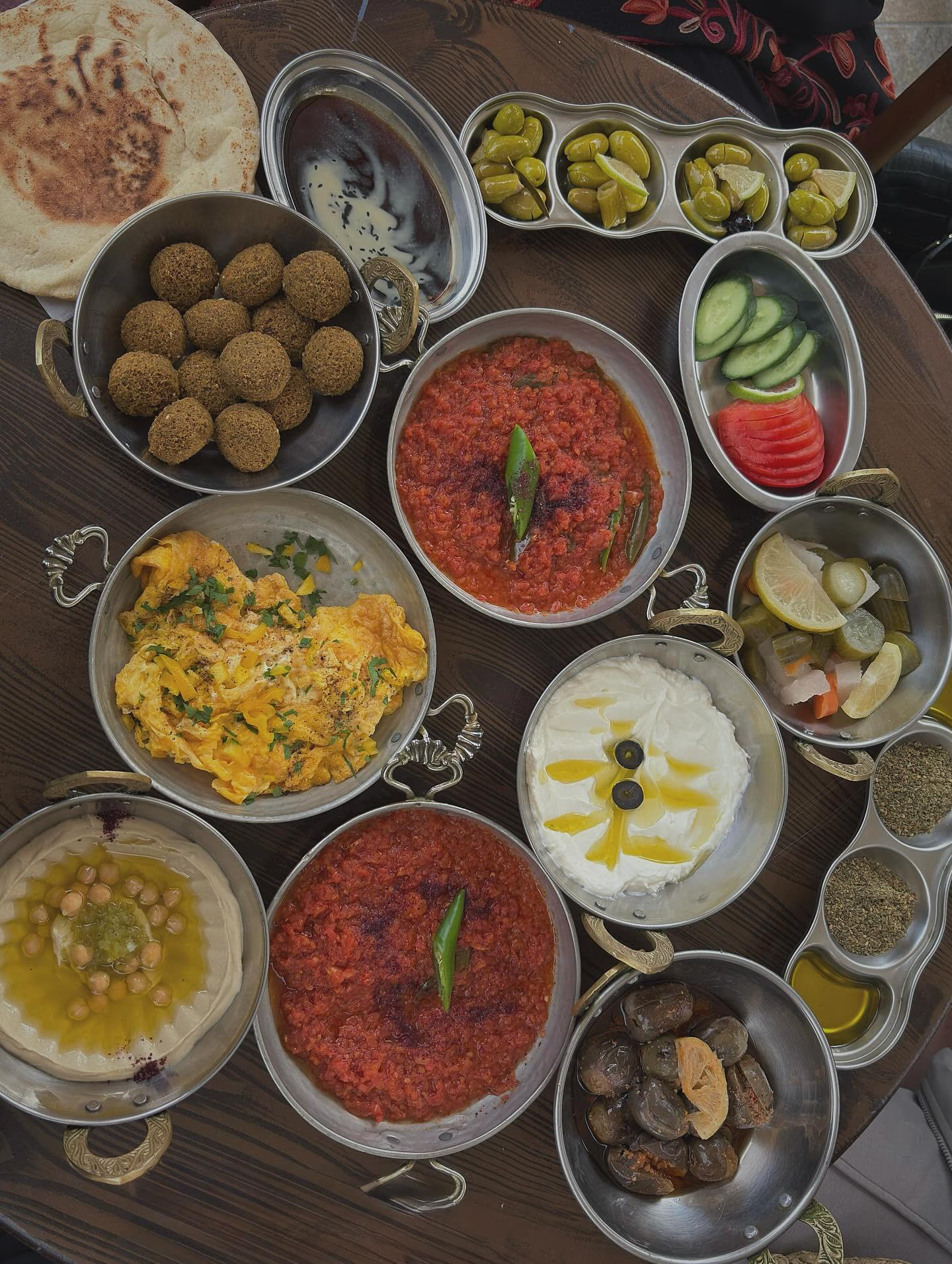
Breakfast in Jordan is a meal worth waking up for. Forget the rushed toast and coffee of Western mornings — a traditional Jordanian breakfast is a spread of small dishes laid out across the table, each one simple but deeply flavorful, and all eaten communally with fresh bread.
The cornerstone of the Jordanian breakfast table is ful medames — slow-cooked fava beans mashed with garlic, lemon juice, and olive oil, often topped with chopped tomatoes, onions, and a scattering of fresh herbs. Ful is hearty, protein-rich, and satisfying in a way that keeps you fueled for hours. Alongside it you will find labneh — thick, strained yogurt with a creamy, tangy flavor — drizzled with olive oil and often sprinkled with dried mint or za'atar.
Speaking of za'atar: this distinctively Middle Eastern spice blend of dried thyme, sesame seeds, sumac, and salt is a breakfast staple in every Jordanian household. It is mixed with olive oil into a fragrant paste and eaten by tearing off pieces of warm flatbread and dipping them directly into the mixture. The flavors are herbaceous, nutty, and slightly tart — addictive in the best possible way. Other common breakfast dishes include fresh tomatoes and cucumbers, sliced olives, white cheese (similar to feta), hard-boiled eggs, and small plates of hummus and pickled vegetables.
The bread itself deserves special mention. Jordanian bread — whether it is the thin, round khubz from the local bakery or the paper-thin shrak bread baked on a traditional dome — is baked fresh daily and is the essential utensil of the meal. Everything is eaten with bread. It is scooped, dipped, wrapped, and torn. A Jordanian breakfast without bread is simply not a Jordanian breakfast.
Street Food in Amman
Amman is one of the great street food cities of the Middle East, and exploring its food scene on foot is one of the best things a traveler can do in the capital. The heart of Amman's street food culture lies in the downtown area — the bustling, chaotic, wonderfully atmospheric neighborhood around the old city center where small shops, market stalls, and hole-in-the-wall restaurants have been serving Amman's residents for generations.
Rainbow Street, the lively pedestrian-friendly avenue on Jabal Amman, is a popular destination for both locals and visitors, lined with cafes, juice bars, and restaurants serving everything from traditional Jordanian dishes to modern fusion cuisine. But for the real street food experience, head deeper into downtown. Walk through the vegetable souks and spice markets near the Roman amphitheater, where vendors sell fresh produce, dried fruits, nuts, and spices in open-air stalls that assault the senses in the best possible way.
Shawarma — thinly sliced roasted meat (chicken or lamb) wrapped in bread with pickles, garlic sauce, and fresh vegetables — is the king of Amman's fast food, and the competition among shawarma shops is fierce. The best shawarma in Amman is carved fresh from the rotating spit, wrapped tightly in warm bread, and consumed standing on a busy sidewalk while the city buzzes past. Other street food favorites include arayes (grilled bread stuffed with spiced minced meat), sambousa (fried pastry triangles filled with cheese or meat), and fresh fruit juices squeezed to order from stalls overflowing with oranges, pomegranates, and sugarcane.
Bedouin Hospitality
Jordanian hospitality is legendary throughout the Arab world, and its deepest roots lie in the traditions of the Bedouin — the nomadic desert communities whose culture of welcoming strangers is one of the oldest and most enduring social customs on Earth. In Bedouin society, a guest is sacred. The obligation to offer food, drink, and shelter to anyone who arrives at your tent is not merely a social nicety — it is a moral duty that transcends personal circumstances. Even the poorest Bedouin family will share their last provisions with a visitor.
This tradition has shaped Jordanian culture profoundly. Throughout Jordan, from the cities to the desert camps, you will encounter a warmth and generosity toward guests that is unlike anything in most Western countries. Shopkeepers will invite you to sit and drink tea. Taxi drivers will share their lunch. Families will insist that you eat more, stay longer, and return again. The phrase "ahlan wa sahlan" — roughly, "you are among family and welcome" — is not an empty pleasantry in Jordan. It is meant, deeply and sincerely.
For travelers fortunate enough to spend a night at a Bedouin camp in Wadi Rum or elsewhere in the desert, the hospitality experience is unforgettable. You will be welcomed into the tent, seated on cushions around a fire, served Arabic coffee and tea, and fed a generous meal — often zarb — while your hosts share stories, play traditional music, and treat you not as a tourist but as an honored guest. This is the living tradition of Bedouin hospitality, and it is one of the things that makes Jordan truly special.
Culinary Experiences for Travelers
Jordan offers a growing number of food-focused experiences that allow travelers to go beyond simply eating the food and actually participate in its preparation and cultural context.
Cooking classes are available in Amman, Petra, and other tourist areas, and they range from informal sessions in a family kitchen to organized workshops led by professional chefs. Learning to prepare mansaf, maqluba, or a traditional mezze spread is one of the best souvenirs you can take home — the skills and recipes last forever, and the experience of cooking alongside Jordanian hosts creates connections that no museum or monument can match.
Market tours in downtown Amman take you through the spice markets, vegetable souks, and specialty food shops of the old city, with knowledgeable guides who explain the ingredients, traditions, and stories behind what you see. These tours often include tastings at street food stalls and sweet shops, providing a structured introduction to flavors that might otherwise overwhelm an unfamiliar palate.
Eating with local families is perhaps the most meaningful food experience available in Jordan. Several community tourism initiatives across the country connect travelers with Jordanian families who open their homes and kitchens to visitors, cooking a traditional meal and sharing it together. These meals — often served on the floor, eaten communally, and lasting for hours — offer a window into daily Jordanian life that no restaurant can provide. The conversations, the laughter, the insistence that you eat just one more spoonful — these are the moments that travelers remember for a lifetime.
Ramadan Food Culture
Visiting Jordan during Ramadan — the holy month of fasting observed by Muslims worldwide — offers a unique window into the country's food culture. During Ramadan, Muslims fast from dawn until sunset, abstaining from food and drink during daylight hours. The fast is broken each evening with iftar, a meal that begins at the moment of sunset and is one of the most important communal dining experiences in the Islamic calendar.
Iftar in Jordan is a feast. The fast is traditionally broken with dates and water or a glass of qamar al-din — a sweet, thick apricot juice that is synonymous with Ramadan across the Arab world. This is followed by a full meal that often includes soup (typically lentil), salads, rice dishes, grilled meats, and an array of special Ramadan sweets including qatayef — small stuffed pancakes filled with sweet cheese or nuts and either baked or fried.
For travelers, Ramadan requires some adjustment — many restaurants are closed during daylight hours, and it is respectful to avoid eating, drinking, or smoking in public during the fast. However, hotels and tourist-oriented restaurants generally remain open for non-fasting visitors. The reward for visiting during Ramadan is the iftar experience itself: the festive atmosphere at sunset, the generosity of Jordanians who frequently invite strangers to share their iftar meal, and the vibrant night markets and social gatherings that fill the streets after dark. Ramadan transforms Jordan's food culture into something especially communal and celebratory.
Food Tips for Travelers
A few practical notes to help you navigate eating in Jordan with confidence:
- Vegetarian travelers will find Jordan surprisingly accommodating. Mezze spreads, falafel, hummus, ful, fattoush, tabbouleh, stuffed grape leaves, and many rice and vegetable dishes are entirely meat-free. Most restaurants understand vegetarian requests, and the abundance of fresh vegetables, legumes, and grains in Jordanian cuisine means you will never go hungry.
- All meat in Jordan is halal, slaughtered according to Islamic dietary law. Pork is not available in local restaurants, and alcohol, while legal, is served primarily in hotels, upscale restaurants, and licensed bars rather than in traditional eateries.
- Tap water is generally safe in Amman and major cities but has a mineral taste many visitors find unpleasant. Bottled water is inexpensive and widely available, and we recommend drinking it throughout your trip, especially in summer and in desert areas where dehydration is a serious concern.
- Hygiene standards at street food stalls and local restaurants are generally good. Look for shops that are busy with local customers — high turnover means fresh food. If a falafel shop has a line of locals at breakfast, that is where you want to eat.
- Tipping is appreciated but not obligatory. A service charge is sometimes included in restaurant bills. If not, a tip of 10 percent is generous and welcome. At street food stalls, tipping is not expected.
- Dietary restrictions beyond vegetarianism (gluten-free, vegan, allergies) can be communicated directly to restaurants and hotels, who are generally willing to accommodate. Carry a card with your dietary needs written in Arabic if your restrictions are serious — it helps enormously in smaller, non-tourist establishments.
Ready to Taste the Real Jordan?
Our Jordan experiences include authentic food encounters — from Bedouin zarb dinners under the stars in Wadi Rum to cooking classes in Amman and home-hosted meals with local families. Let us build a journey that feeds your curiosity and your appetite.
Plan Your Culinary Journey