
Seven days in Jordan is the sweet spot — enough time to experience the ancient ruins of Jerash, the extraordinary city of Petra, the breathtaking desert of Wadi Rum, the therapeutic waters of the Dead Sea, and the vibrant capital of Amman without feeling rushed. This carefully crafted itinerary, designed by our local experts, balances iconic landmarks with authentic experiences that most tourists miss.
Your 7-Day Journey at a Glance
Day 1 – Amman: Arrive & Explore the Capital
Most international flights arrive at Queen Alia International Airport, just 35 kilometers south of Amman. After checking in and recovering from your journey, spend your first afternoon exploring the city's layered history and buzzing energy.
Start at the Amman Citadel (Jabal al-Qal'a), a hilltop complex overlooking the city that contains ruins spanning 8,000 years — including the Temple of Hercules, a Byzantine church, and the Umayyad Palace. The panoramic view from the top over Amman's white limestone hills is one of the city's defining moments.
Walk downhill to the Roman Theatre, a 6,000-seat amphitheater carved into the hillside in the 2nd century AD that still hosts performances today. Then descend into Downtown Amman (Al-Balad) for a sensory introduction to Jordanian life — browse the souk, drink fresh-squeezed juice, and taste your first falafel or hummus from one of the legendary local spots.
In the evening, head to Rainbow Street in Jabal Amman for dinner at a rooftop restaurant. Try mansaf, Jordan's national dish of lamb cooked in fermented dried yogurt, served over rice and bread.
Day 2 – Jerash & the Northern Highlands
Rise early for a day trip to Jerash, located just 48 kilometers north of Amman and considered the best-preserved Roman city in the world outside of Rome itself. Plan to spend at least 3–4 hours exploring its extraordinary monuments.
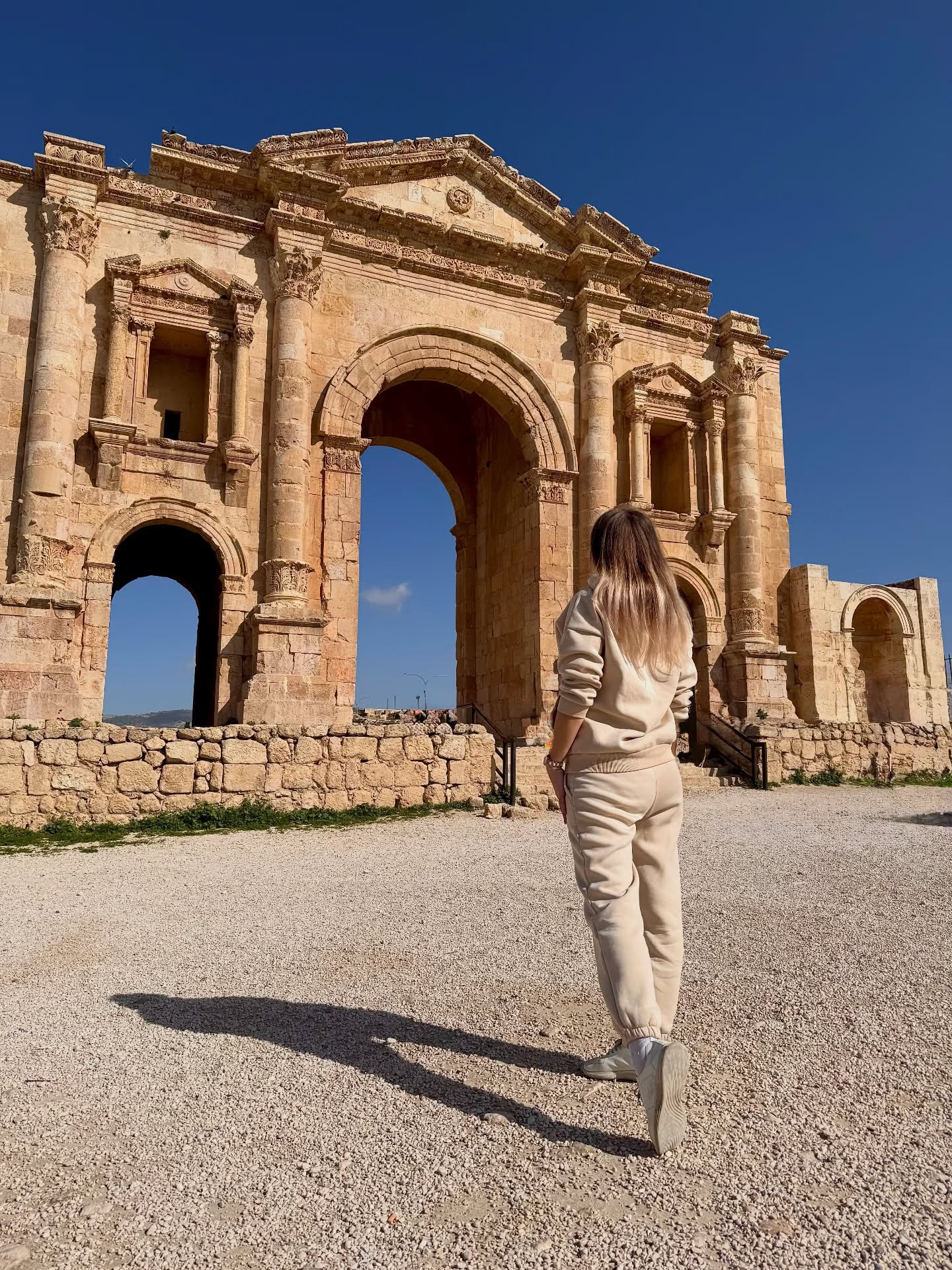
Enter through Hadrian's Arch, built to honor Emperor Hadrian's visit in 129 AD, and walk toward the spectacular Oval Plaza — an elliptical colonnaded forum unlike any other in the Roman world. From there, the Cardo Maximus (colonnaded main street) stretches ahead, flanked by the South and North Theatres, the Nymphaeum, and the Temple of Artemis, whose massive columns still stand proudly against the sky.
On the way back to Amman, stop at Ajloun Castle (Qal'at Ar-Rabad), a 12th-century Arab fortress built by Saladin's nephew that commands sweeping views across the forested northern highlands all the way to the Jordan Valley — on clear days, you can see the Sea of Galilee.
Day 3 – Madaba, Mount Nebo & the Dead Sea
Today's journey travels southwest from Amman along the historic King's Highway, one of the oldest continuously used roads on Earth.
Begin in Madaba, the City of Mosaics. Visit St. George's Church, home to the oldest surviving cartographic depiction of the Holy Land — a 6th-century Byzantine mosaic map showing Jerusalem, Egypt, and the Jordan River in extraordinary detail. The town's streets are lined with workshops where artisans still create traditional mosaic art using ancient techniques.
Continue to Mount Nebo, the mountain from which Moses is said to have viewed the Promised Land before his death. The site contains remarkable Byzantine mosaics inside the memorial church, and on clear days, the panorama stretches from the Dead Sea and Jerusalem to the Jordan Valley and Jericho — one of the most spiritually charged views in the Middle East.
The afternoon belongs entirely to the Dead Sea. At 430 meters below sea level, this is the lowest point on Earth. Float effortlessly in hypersaline water, cover yourself in the famous black mineral mud, and let the extraordinary environment settle into your memory. The Dead Sea's minerals — magnesium, potassium, calcium, and bromine — have been celebrated for their therapeutic properties since Cleopatra's time. Stay to watch the sun set over the Judean hills on the opposite shore — the colors are extraordinary.
Day 4 – Petra: The Treasury & Main Trail
Travel south to Petra — approximately 3 hours from the Dead Sea area via the Desert Highway. Check into your accommodation in Wadi Musa, the town adjacent to Petra, and rest briefly before the afternoon visit.
Enter Petra through the Siq, a natural gorge 1.2 kilometers long with towering walls up to 80 meters high. The play of light on the sandstone striations — rose, amber, cream, and purple — is already breathtaking before you reach the main monuments. Walk slowly and look for Nabataean water channels carved into the rock walls, and small votive niches that once held carved figures.
When the Treasury (Al-Khazneh) comes into view at the end of the Siq, you will understand why Petra moves people to tears. Its 40-meter-tall Hellenistic facade, carved into the cliff face over 2,000 years ago, is one of the most spectacular sights on Earth.
Continue down the Street of Facades past dozens of carved tomb fronts to the Theatre, then climb the switchback path to the Royal Tombs — the Urn Tomb, Silk Tomb, Corinthian Tomb, and Palace Tomb, lined up across the eastern cliff face. The view back across the valley from their level is stunning.
In the evening, if available, consider Petra by Night — the Siq lined with 1,500 candle-lit paper bags leading to the candlelit Treasury, accompanied by Bedouin music. It runs Monday, Wednesday, and Thursday evenings.
Day 5 – Petra: The Monastery & Hidden Trails
Dedicate a full second day to Petra — most visitors who rush through in one day regret it deeply. Begin early to reach the quieter parts of the site before the crowds arrive.
The morning's main goal is the Monastery (Ad Deir). Reach it by climbing approximately 900 rock-cut steps — a 45-minute ascent that passes through beautiful desert scenery. The Monastery stands 47 meters wide and 48 meters tall, actually larger than the Treasury, and in the morning light its facade glows a deep amber. The small café at the viewpoint serves excellent tea and coffee while you absorb the view across the Wadi Araba.
Return via the High Place of Sacrifice trail, which begins near the Theatre and leads up to a Nabataean altar platform with panoramic views across the entire site. Descend via the Wadi Farasa route, passing the carved Lion Fountain, the Garden Tomb, and the Renaissance Tomb — some of the most beautiful and least-visited monuments in Petra.
In the afternoon, explore Little Petra (Siq al-Barid), a smaller canyon just 8 kilometers north of the main site that served as a caravanserai — a resting place for the merchant caravans that made Petra wealthy. It's less crowded and strikingly beautiful, with a painted dining room ceiling that is one of the rarest surviving Nabataean paintings.
Day 6 – Wadi Rum Desert Camp
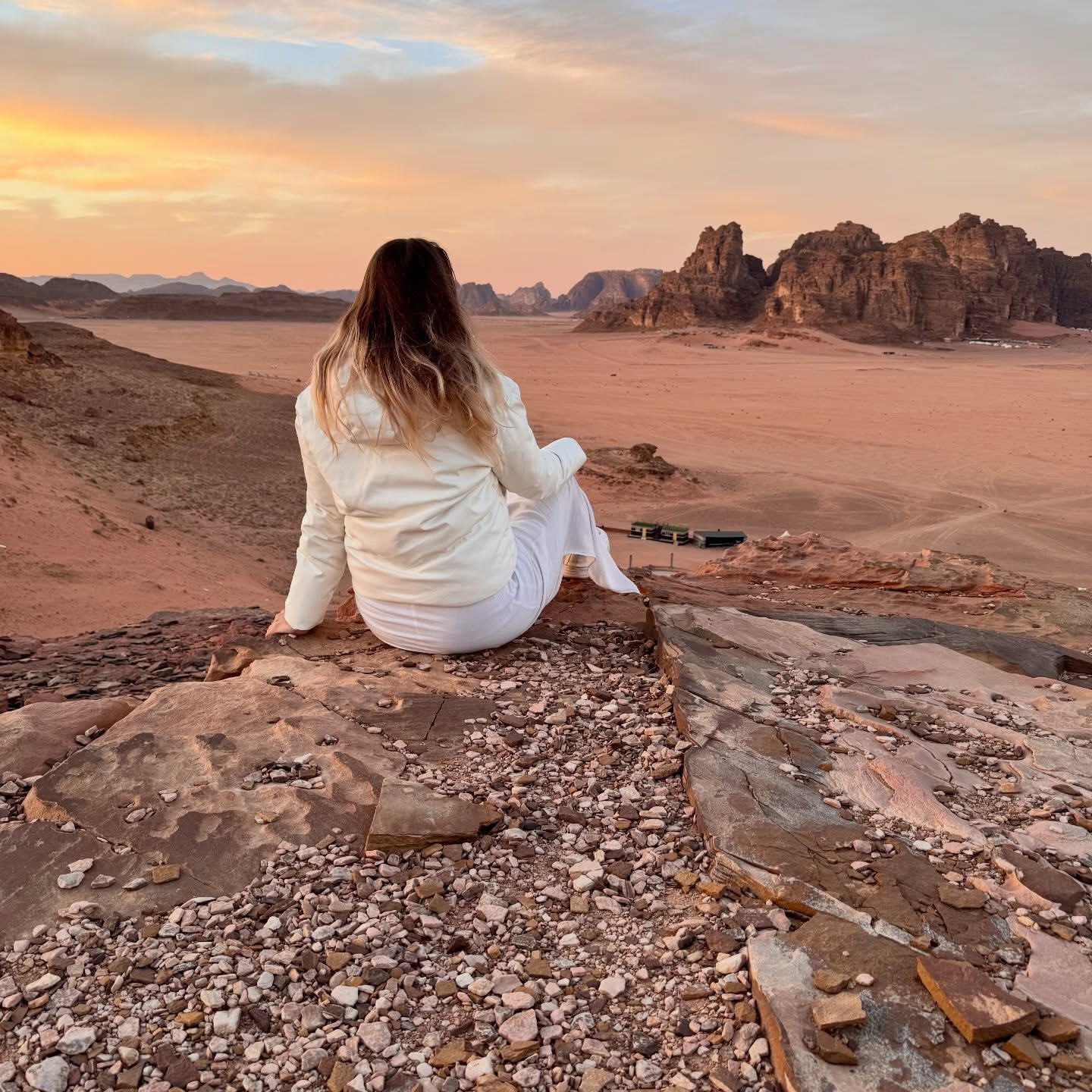
Drive southeast from Petra (approximately 1.5 hours) to Wadi Rum, Jordan's most dramatic landscape and a protected UNESCO World Heritage Site. The valley floor stretches for kilometers between towering sandstone mountains that glow red and orange — so alien in appearance that NASA has used Wadi Rum as a Mars analogue research site and multiple films have been shot here.
Spend the afternoon on a 4WD desert tour with a local Bedouin guide, visiting ancient rock inscriptions, natural sand dunes, narrow canyon corridors, and high viewing platforms. The landscape changes with every hour of light — early afternoon is crisp and dramatic, while sunset transforms everything into shades of amber, crimson, and violet.
As darkness falls, the sky becomes extraordinary. Wadi Rum has some of the darkest skies in the Middle East — on clear nights the Milky Way is visible with the naked eye, and countless stars map the desert sky above you. Sleep in a traditional Bedouin camp under the stars, or in a transparent bubble tent for an unforgettable night. Your Bedouin hosts will serve a traditional slow-cooked zarb dinner — meat and vegetables cooked underground in a sand oven — one of the finest meals you'll eat in Jordan.
Day 7 – Aqaba or Return to Amman
Your final day offers two excellent options depending on your departure logistics.
Option A – Aqaba: Continue south from Wadi Rum to Aqaba, Jordan's only coastal city and a vibrant Red Sea resort town. Spend your last morning snorkeling or diving in the remarkable Red Sea coral reefs, or simply relax on the beach and reflect on your journey. The Red Sea here is exceptionally clear with visibility reaching 20–30 meters, and its reefs support an astonishing variety of marine life including sea turtles, rays, and hundreds of species of tropical fish. Aqaba also has the closest land border crossing to Israel (Yitzhak Rabin/Wadi Araba crossing) for those continuing onward.
Option B – King's Highway to Amman: If you fly from Amman, take the scenic King's Highway north, stopping at Kerak Castle — a massive Crusader fortress perched on a hilltop with commanding views across the Rift Valley. Built in the 12th century, Kerak was one of the key strongholds of the Crusader Kingdom of Jerusalem and later the Ayyubid and Mamluk empires. The castle's deep underground passageways and clifftop position make it one of the most atmospheric medieval sites in the Middle East.
Essential Planning Tips for Your Jordan Trip
- Jordan Pass: If visiting Jordan's paid attractions, the Jordan Pass includes your visa and entrance to over 40 sites including Petra. Purchase it online before you travel — it requires a minimum three-night stay.
- Transportation: A private car with driver is the most flexible and comfortable option for this itinerary. Our team can arrange door-to-door transfers between every destination.
- Best months: March–May and September–November offer ideal temperatures for walking Petra and Wadi Rum. Avoid July–August in Petra — the afternoon heat in the exposed valley can exceed 40°C.
- Currency: The Jordanian Dinar (JOD) is one of the world's strongest currencies. ATMs are widely available in Amman, Aqaba, and Wadi Musa (Petra). Keep small denominations for tips and markets.
- Dress code: Jordan is a relatively liberal country but dress modestly when visiting religious sites and traditional markets. Covered shoulders and knees are appreciated. At the Dead Sea and Aqaba's beaches, normal swimwear is fine.
- Safety: Jordan is consistently ranked as one of the safest countries in the Middle East for tourists. The local culture places immense value on hospitality toward guests.
- Language: Arabic is the official language, but English is widely spoken in tourism areas, hotels, and restaurants. A few words of Arabic — shukran (thank you), marhaba (hello) — will earn you warm smiles.
Want This Itinerary Planned for You?
Our local Jordan experts will handle every detail — transfers, accommodations, guiding, and authentic experiences — so you can simply enjoy the journey.
Plan My 7-Day Jordan Trip